Why fins?
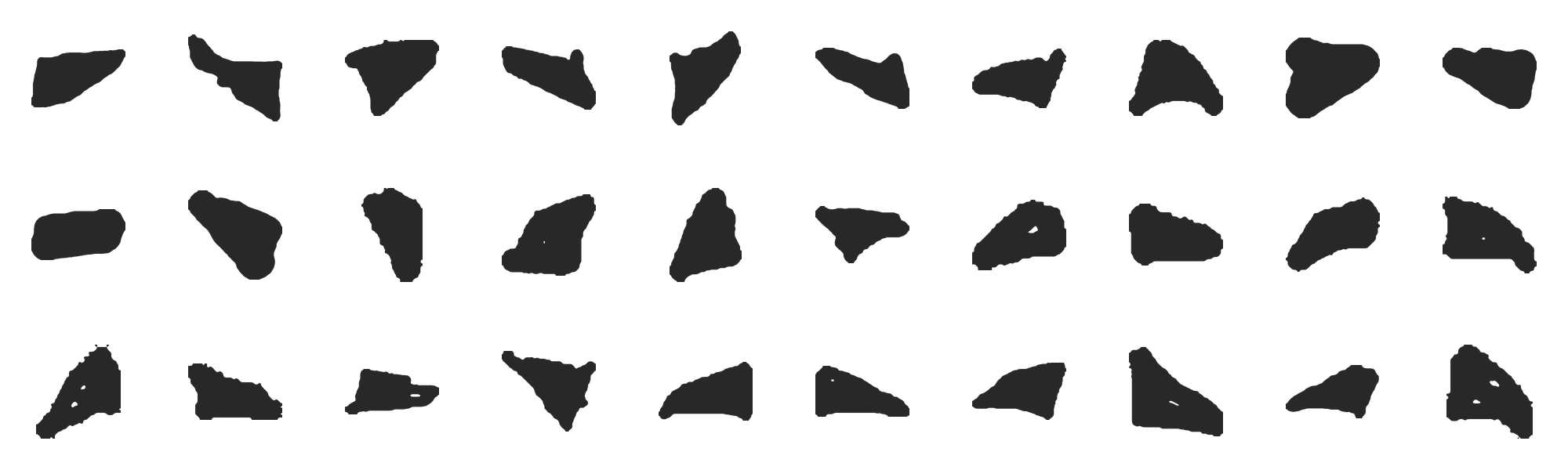
Every year, young white sharks gather off Año Nuevo, California, to feed. Their pectoral fins, the wing-like fins behind the head, give them lift and steering, so how those fins change with growth says a lot about how a shark lives.
You can't ask a white shark to hold still for a tape measure, but a drone can measure one from overhead. We asked:
- How do fins grow? Do they keep pace with the body?
- Is this population different? It had only been measured in Australia.
- Can fins tell a shark's age? A machine learning model could learn which fin-to-body proportions mark each life stage.
How it works
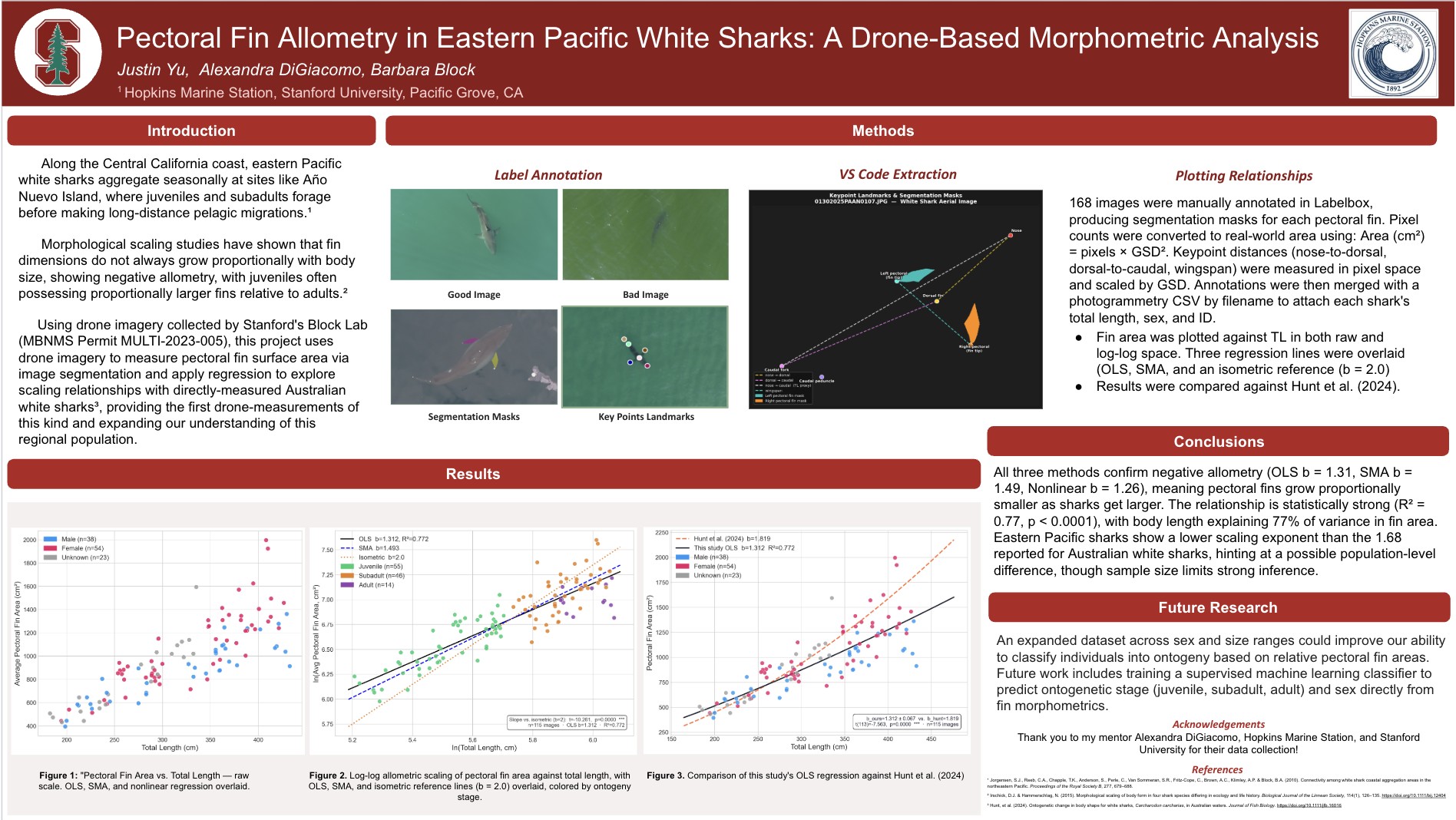
Stanford's Block Lab flies drones straight over the sharks, and the altitude tells you how big each pixel is. I turned hand-traced fins from 168 photos into real sizes and fit a scaling exponent, b: at 2, fins keep pace with the body; below 2, they fall behind.
What I found
The fins fall behind: b came out between 1.26 and 1.49 across three fitting methods, with length explaining 77% of fin area. That's below Australia's 1.68, a hint the two populations grow differently.